
Like every year, we humans look forward to summer. Sitting outside in the evening, enjoying the warm temperatures. But while we enjoy the heat, dairy cows suffer considerably. Heat stress is a growing problem on dairy farms as a result of climate change, and its consequences are far more far-reaching than they appear at first glance.
The most important facts in brief
-
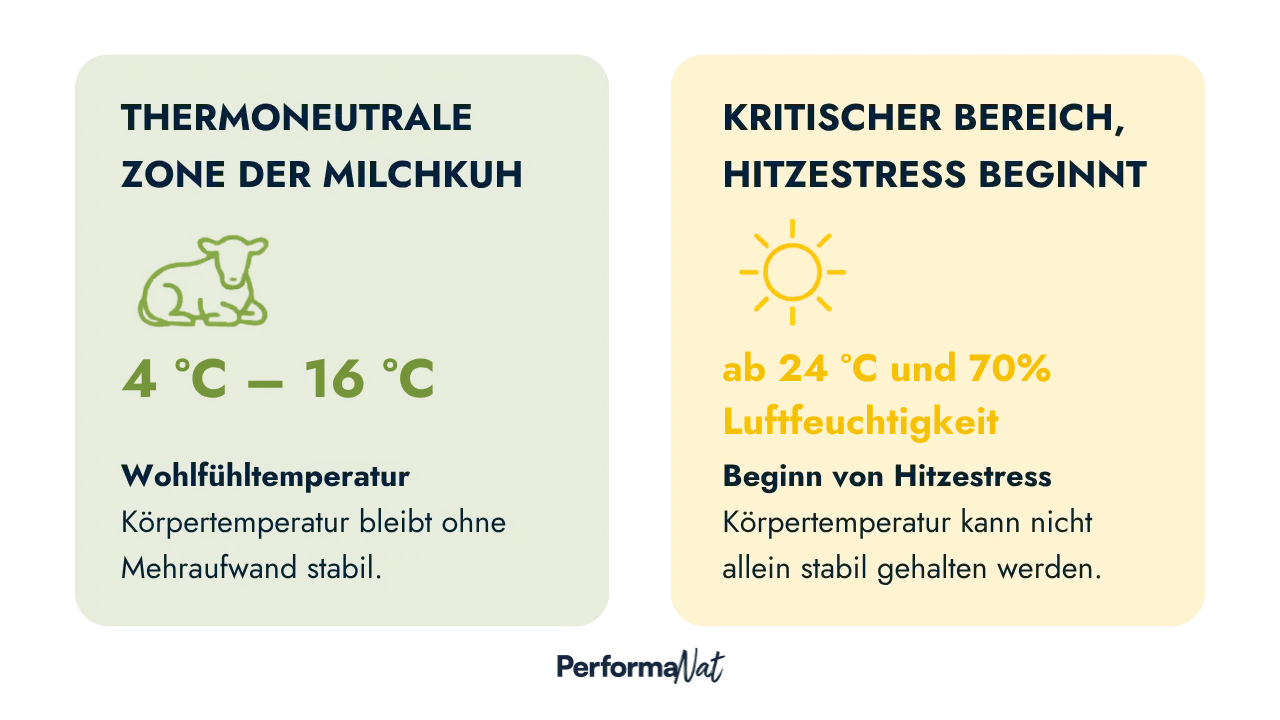
Dairy cows experience heat stress at an ambient temperature of 24 °C and a humidity of 70%; their comfort temperature is between 4 °C and 16 °C.
-
Heat stress reduces feed intake, inhibits rumination and can significantly reduce milk yield.
-
A practical study with over 5,700 calvings shows that Heat stress led to up to 3 kg less milk per cow per day, a 5-10% lower insemination success, and around 6% more cows leaving the herd.
-
Calves are also affected: Hot summers can weaken the immune system and delay the age of first calving in the long term.
-
Heat stress can be effectively reduced with targeted husbandry, feeding and management measures.
When do cows start experiencing heat stress?
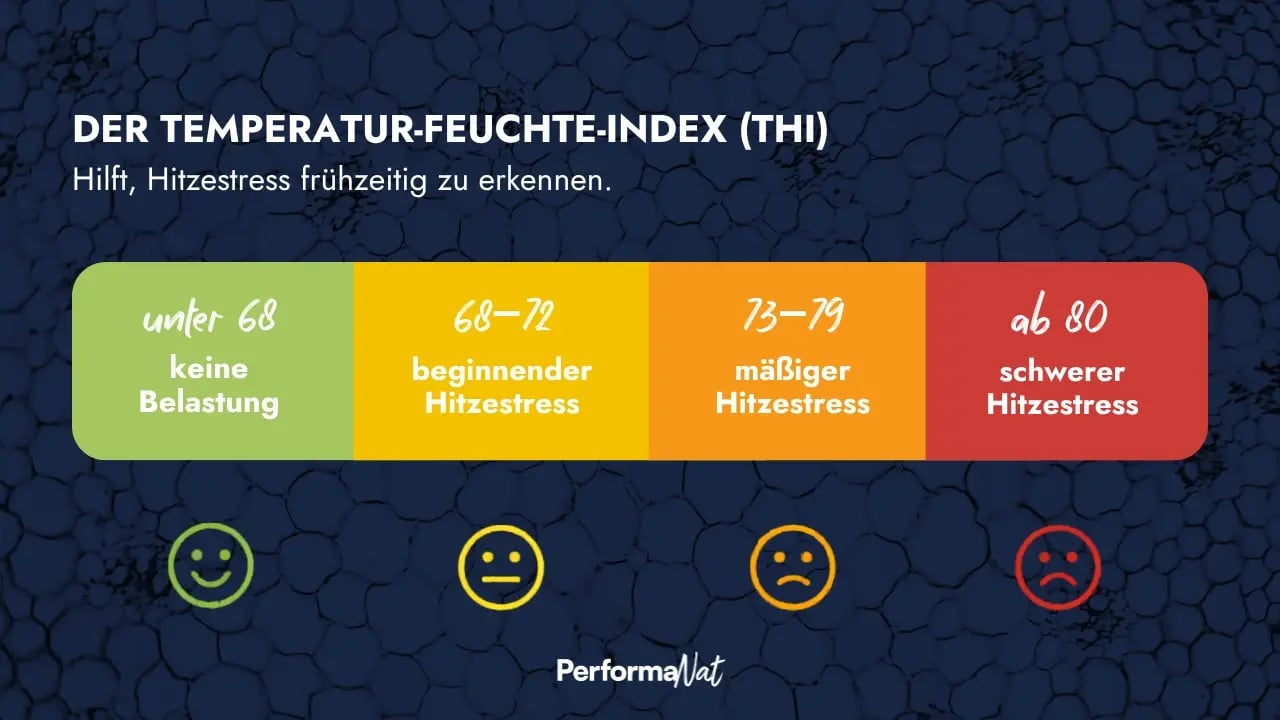
The thermoneutral zone of dairy cows, i.e. the temperature range in which the body can maintain a constant temperature without additional effort, is between 4 °C and 16 °C. Heat stress begins at an ambient temperature of 16 °C and a humidity of 70 %. The temperature-humidity index (THI) is often used for assessment: from 68 to 72, experts speak of the onset of heat stress in dairy cows.
To make matters worse, high-yielding dairy cows produce enormous amounts of body heat themselves due to their intensive metabolic activity. In the first third of lactation, dairy cows have a heat output of around 1,500 watts, roughly equivalent to that of a large radiator. If the outside temperature rises, they can hardly get rid of this heat.
How can I recognise heat stress in cows?
Cows suffering from heat stress show a change in behaviour that can be easily observed with attention:
| Change in behavior | Explanation |
| Increased breathing rate, panting | Attempt to release heat via the respiratory tract |
| Increased standing, less lying down | Larger body surface area when standing increases heat dissipation |
| Reduced food intake | Metabolism of food generates body heat |
| Inhibited rumination activity | Consequence of reduced feed intake |
| Increased drinking | Compensation for increased water loss |
| Less oestrus behaviour | Heat stress impairs the reproductive system |
Even an increase in core body temperature of just 0.5 °C causes cows to stand significantly more and lie down less. This in turn worsens rumination behaviour and increases energy consumption.
What are the consequences of heat stress on health and performance?
The consequences of heat stress go far beyond visible changes in behaviour. A retrospective practical study from Central California, which analysed data from over 5,700 calvings from two dairy herds over three years, shows the extent of the effects:
Milk yield
Young cows with heat stress before or after calving produced 178 kg less milk in the first 90 days of lactation than cows without heat stress. In multi-calving cows, the drop was 269 kg over the first 90 days of lactation, corresponding to up to 3 kg per cow per day.
Fertility
Heat stress after calving was associated with a significant reduction in first insemination success in young cows.
Oocytes can be damaged by heat as early as 105 days before ovulation. Heat stress can also lead to cysts on the ovaries and frequent re-calving.
Diseases and abortions
Heat stress increases susceptibility to mastitis and metritis, as heat creates favourable conditions for pathogens on the one hand and suppresses the animals' immune defences on the other. The lower feed intake during heat stress also reduces saliva production, which destabilises the rumen pH and increases the risk of acidosis. In the study, heat stress led to approximately 6% more calves leaving the herd within the first 90 days of lactation.
Are calves also affected by heat stress?
Yes, and this is often underestimated. Calves find it much more difficult to regulate their body temperature than adult cows. The optimum ambient temperature for calves under three weeks old is between 15 °C and 25 °C. Studies show that hot summers weaken calves' immune systems and can even delay the age at first calving in the long term. Heat tolerance decreases further during growth, and data show poorer growth performance in heifers in hot weather.
 In calves with heat stress, the body conserves water, and toxins remain in the body longer. In the worst case, lactic acidosis can occur, which can trigger further inflammation.
What can I do to combat heat stress in the stable?
There are a number of well-documented measures to combat heat stress in housing and feeding:
Housing and stable climate
- Switch on fans (slow-running fans with a diameter of 1.20 to 1.50 m) above the feeding alley and cubicles from a barn temperature of 18 to 20 °C
- Water cooling of the cows only from temperatures above 24 °C, large drip spraying at intervals of 5 minutes sprinkling and 10 minutes break
- Open side walls, gates and doors for maximum air movement
- Light-colored roof covering or sandwich elements to reduce radiant heat
- Many watering points well distributed in the barn, clean and easily accessible
Feeding
- Increase the amount of mineral feed and cattle salt (approx. 10 % more)
- Use of sodium bicarbonate (150 to 300 g per animal per day) to stabilise the rumen
- Increase the energy density of the ration with rumen-stable feed fats and glucoplastic energy sources
- Push feed several times a day, spread feeding over two or more meals
- Vitamin E (approx. 1,000 mg per animal per day) and selenium to reduce oxidative stress
In addition to these measures, the PerformaNat EnergyBolus can help to reduce the increased risk of ketosis during periods of heat stress.
For fertility, the PerformaNat ReproBolus provides support from the time of follicle maturation to successful implantation. Thanks to its controlled release period of 28 days, it provides the cow with a continuous supply of vitamin A, beta-carotene, trace elements and phytogenic active ingredients.
Frequently asked questions about heat stress in cows
How can I recognize heat stress in cows at an early stage?
The first signs are increased respiratory rate, panting, increased standing and visibly reduced feed intake. An increase in core body temperature of just 0.5 °C measurably changes standing and lying behavior. Activity sensors can help to automatically detect these changes before economic damage occurs.
What solutions are there to combat heat stress in dairy cows?
The most effective measures combine housing and feeding: fans from 18 to 20 °C barn temperature, cow showers from 24 °C, optimized water supply, increased mineral supplementation and an adapted ration with higher energy density. Targeted feed additives such as sodium bicarbonate stabilize the rumen pH. It is crucial that measures are implemented in good time before the onset of heat stress.
What is the relationship between heat stress and profitability on dairy farms?
The economic consequences of heat stress are considerable. Studies show up to 3 kg less milk per cow per day, 5 to 10 % less successful insemination and around 6 % more cows leaving the herd. Added to this are increased treatment costs due to mastitis, metritis and metabolic disorders. Investments in heat protection therefore pay off on most farms.