

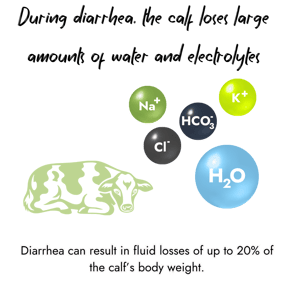
Diarrhea causes significant fluid loss, so every litre counts.
When a calf has diarrhea, it loses large amounts of water and electrolytes. If this loss is not replenished in time, the calf will become increasingly dehydrated.
ElectrolyteTab provides a balanced combination of essential electrolytes and is mixed with 2 litres of warm water. This gives the calf additional fluid to supplement its regular milk intake.
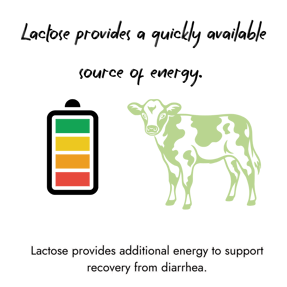
Fluids alone won't get the calf back on its feet.
Diarrhoea causes the calf to lose a lot of energy. At the same time, the stressed intestinal tissue has difficulty absorbing nutrients.
The lactose contained in ElektrolytTab provides readily available energy. Milk replacer should still be fed as part of the standard feeding routine, as it continues to provide important nutrients, including fat, protein and vitamins.
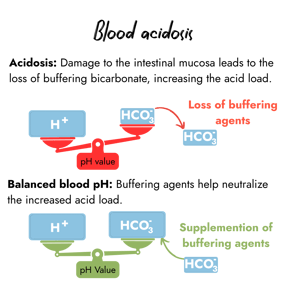
Diarrhea can lead to metabolic acidosis, which reduces the sucking reflex and causes the calf to become bedridden.
As a result of diarrhoea, the calf loses buffering substances. This causes the blood’s pH level to drop and acidosis may develop. The calf appears increasingly lethargic and loses its appetite for milk.
Bicarbonate and citrate help stabilise the pH-balance. In addition to fluids, ElektrolytTab also provides important buffering substances.
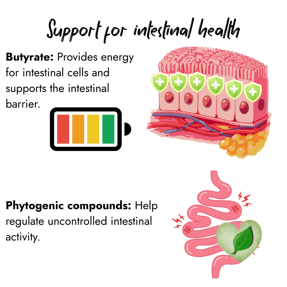
A stressed gut needs more than just electrolytes.
Butyrate serves as an energy source for intestinal cells and supports the natural function of the intestinal barrier.
Selected phytogenic active ingredients support the natural regulation of intestinal motility, thereby helping to soothe a stressed gut.
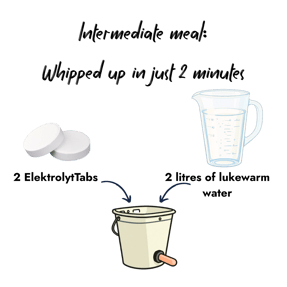
Two tablets. Two litres of water. No weighing. No clumps.
The effervescent tablets are already precisely pre-measured. Two electrolyte tabs dissolve completely in two litres of lukewarm water.
The tablets dissolve in less than two minutes without tedious stirring or forming lumps. By the time you bring it to the calf, it’s ready to use.
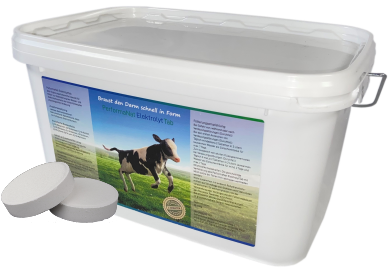

Would you like to support
Contact usFluid loss and inflammation in the intestines begin with loose feces.
Even in mild cases, the calf loses more fluid than usual. At first, it often still appears healthy, even as the feces becomes slightly loose and the intestinal tissue shows signs of inflammation.
As diarrhea worsens, damage to the intestinal tissue increases, as do losses of water, electrolytes, energy and buffering substances. Therefore, supplemental care should not wait until the calf is significantly weakened but should begin at the earliest signs.
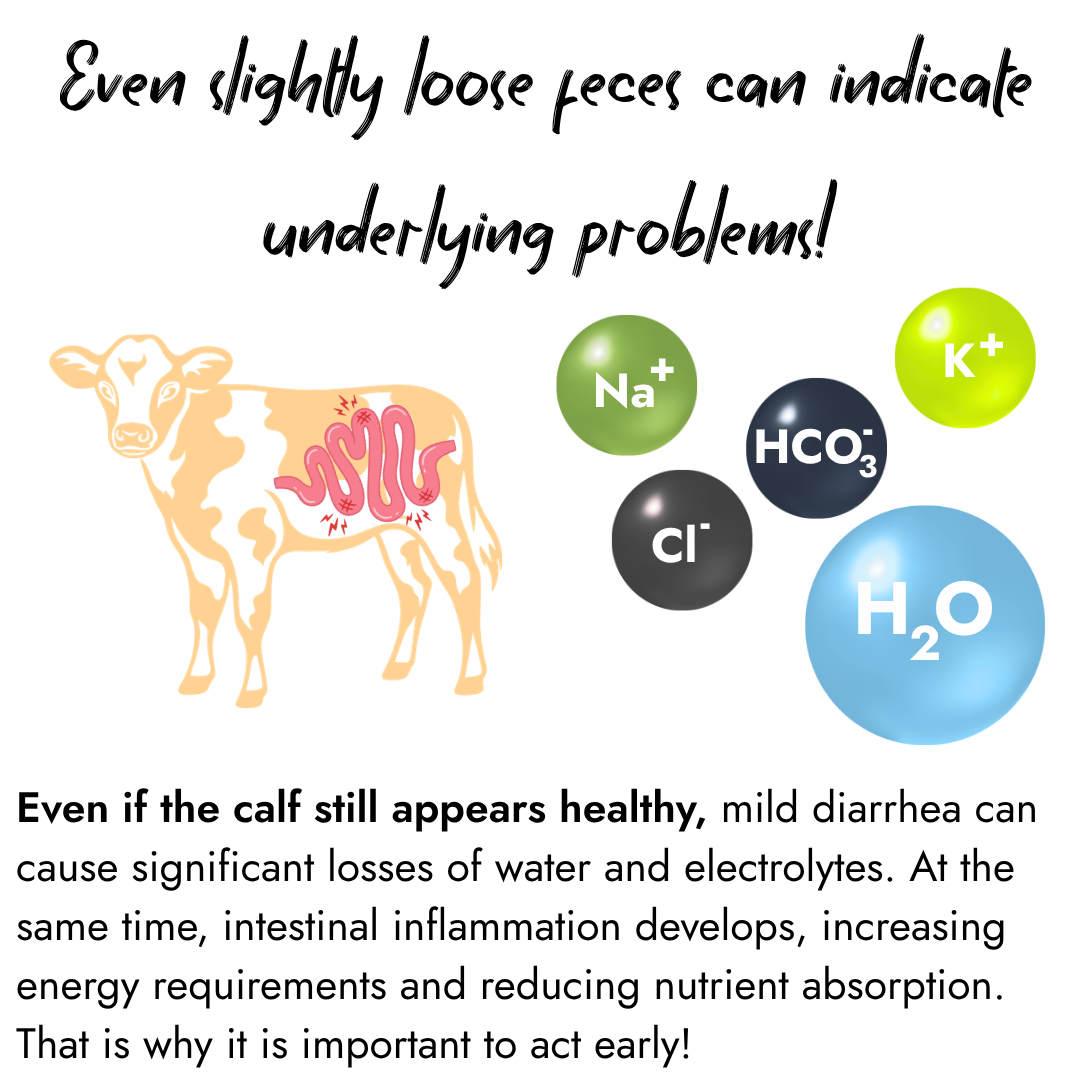
Detect early and respond appropriately.
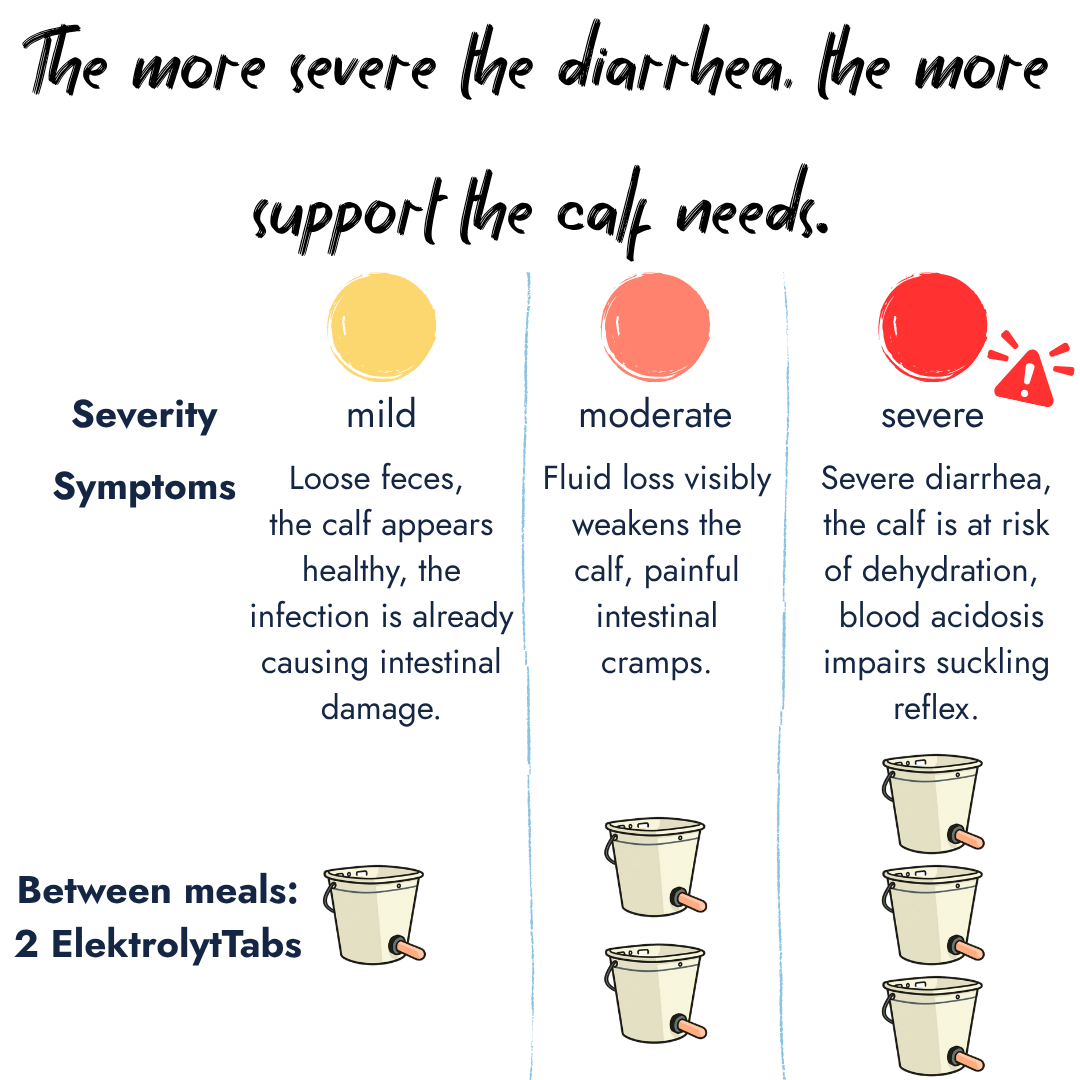
In mild cases, the calf appears largely healthy. As pathogens multiply in the intestine and release toxins, they cause damage to intestinal tissue and fluid loss. The feces begin to become loose. This is the first sign of mild diarrhoea.
- Two electrolyte tablets once a day as a intermediate meal.
In moderate cases, the diarrhea is much more noticeable. The calf appears lethargic due to fluid loss. The damaged intestinal tissue is less able to absorb nutrients. In addition, painful intestinal cramps occur, which further weaken the calf.
- Two electrolyte tablets twice daily as aintermediate meal.
In severe cases, the calf has watery diarrhea; it can lose up to 20% of its body weight in fluid per day and become dehydrated. The loss of buffering substances leads to metabolic acidosis. The calf is in pain and barely drinks at all. This condition is fatal without treatment.
- Give two ElectrolyteTabs three times a day as a intermediate meal and consult a veterinarian.
If the calf’s condition does not improve within 7 days, a veterinarian must be consulted.
Don't wait until the calf is weakened.
The ElectrolyteTab should be administered at the first signs of fluid loss or as soon as diarrhea begins. This supports the regeneration of intestinal tissue and helps mitigate the progression of the illness.
The more severe the diarrhea, the more frequently you can offer a intermediate meal made from two ElektrolytTabs dissolved in two litres of body-temperature water.
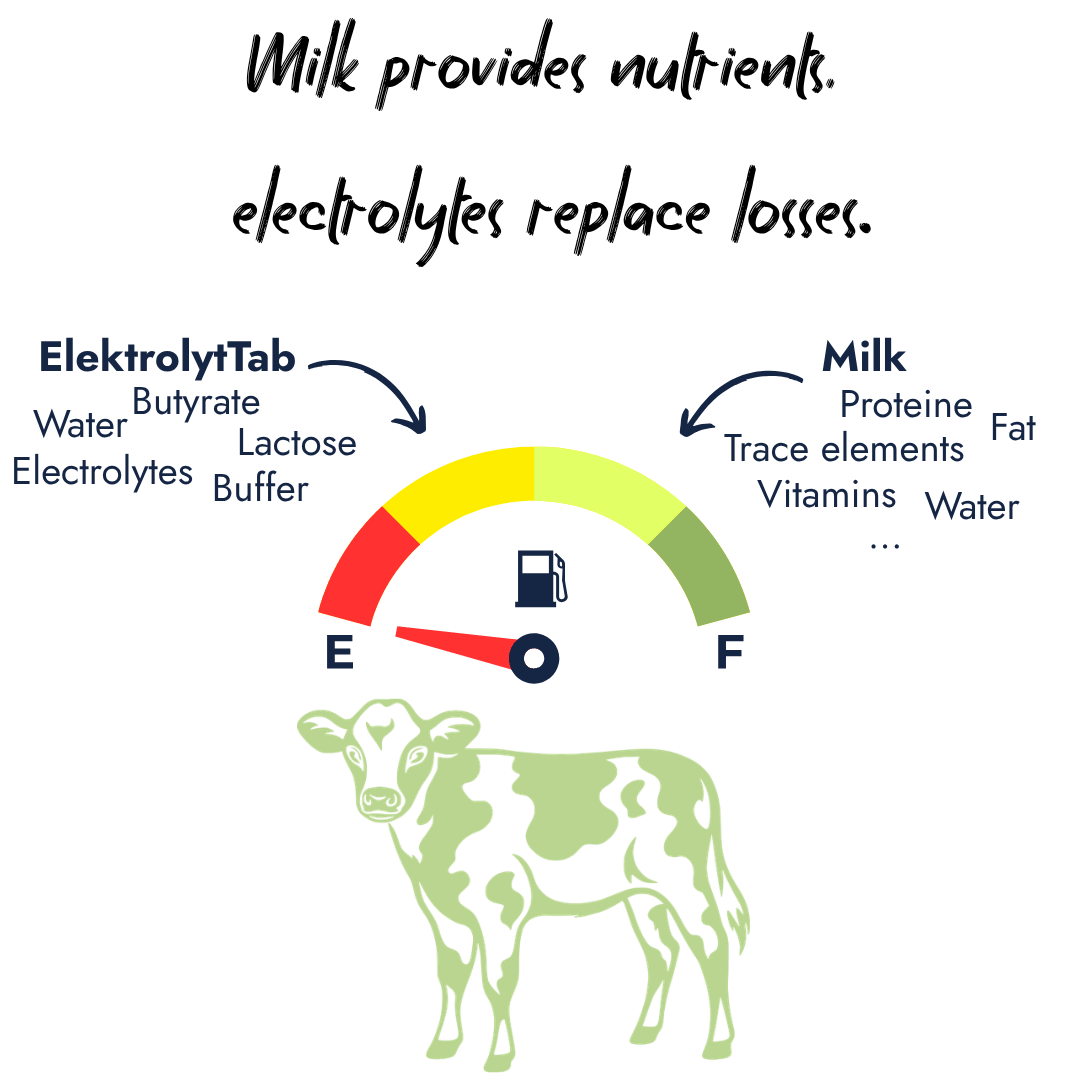
The electrolyte solution supplements the milk, it does not replace it.
Milk continues to provide the calf with essential nutrients, including energy, fat and protein. Therefore, it is essential to continue feeding it even in cases of diarrhea. The ElectrolyteTab is dissolved separately in water and offered as a supplemental drink at intervals of about two to three hours between meals, since the buffering agents can adversely affect milk digestion and lead to abnormal fermentation.
In addition, the intake of nutrients and fluids is distributed more evenly throughout the day, which supports the calf’s recovery.
This allows the calf to consume the electrolyte solution as naturally and with as little energy expenditure as possible.
The electrolyte tabs should be dissolved in lukewarm water and offered in a teat bucket. The calf’s weakened body must first warm up the cold water, which costs it additional energy. Sucking from the elevated teat bucket also stimulates the natural oesophageal groove reflex, directing the fluid toward the abomasum. The calf should drink the solution as independently as possible, but can also be slowly fed if its sucking reflex is weak.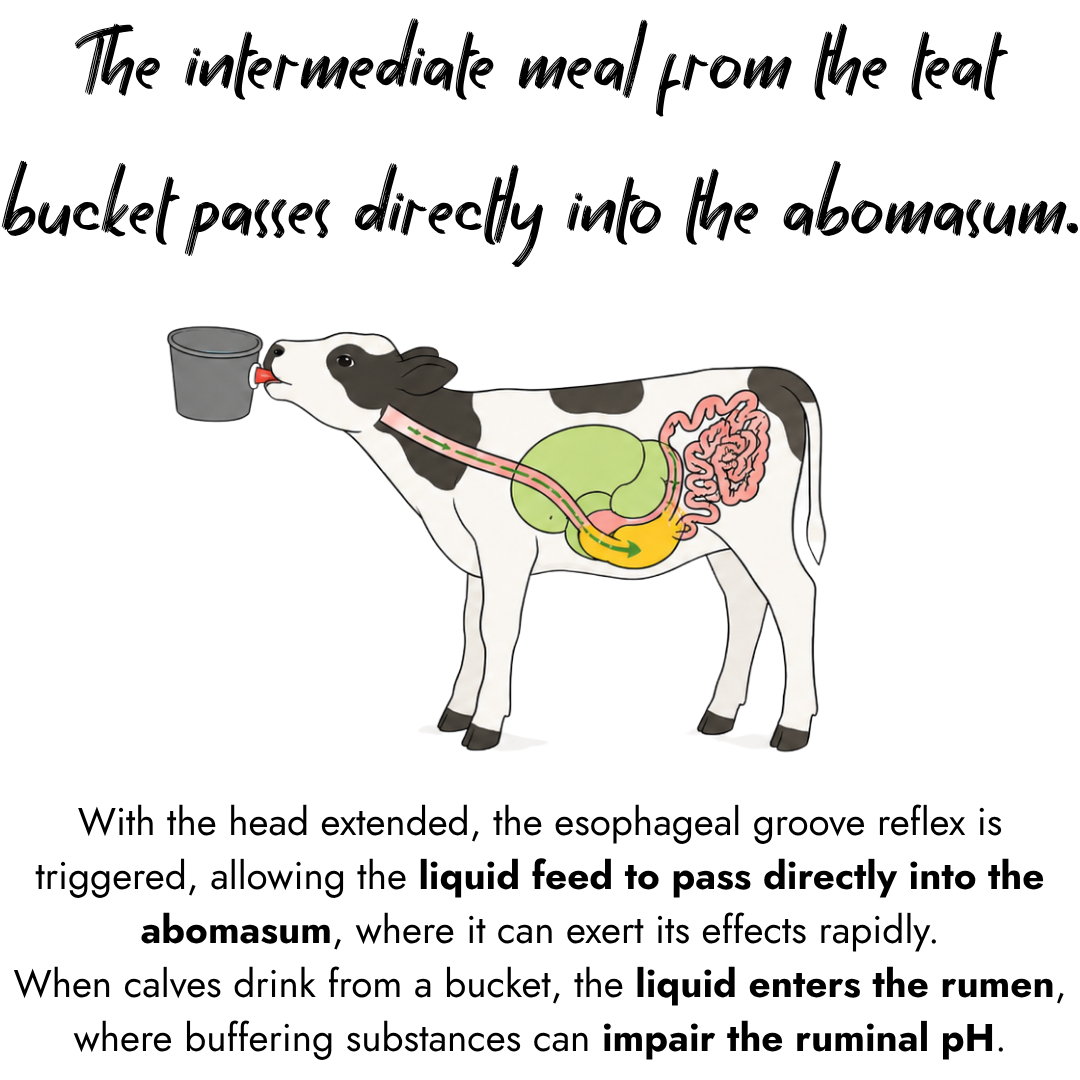
More is not necessarily better.
Simultaneous administration of additional electrolyte or buffer products is not recommended. ElektrolytTab contains sufficient amounts of electrolytes, bicarbonate and other buffering substances. Additional products may lead to an excess. In particular, excessive intake of buffer substances can shift the pH-balance in the opposite direction and lead to metabolic alkalosis, which the calf cannot compensate for.
Mucilage soothes the intestines but does not replace lost fluids.
Cooked flaxseed can support the intestinal mucosa thanks to its mucilage. However, when a calf has diarrhoea, it simultaneously loses large amounts of water, electrolytes, energy and buffering substances. The ElektrolytTab is specifically designed to compensate for these losses and also to support the stressed gut. Therefore, flaxseed cannot replace an electrolyte solution.
They help maintain feces consistency but do not provide the calf with a complete diet.
Psyllium husks bind water and can therefore affect the consistency of intestinal contents. This makes the feces appear firmer, but the calf still loses too much fluid. Psyllium husks do not provide the calf with a balanced combination of electrolytes, energy and buffering agents. ElektrolytTab provides the calf with exactly what it needs: It simultaneously supports fluid and electrolyte balance, energy supply, pH-balance and the stressed intestinal tract.