

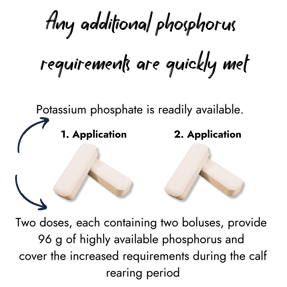
A highly available supply of phosphorus meets the acute need around calving.
Each two-bolus dose provides 48 g of phosphorus in the form of highly soluble monopotassium phosphate. It can be absorbed quickly and provides the cow with a targeted supply of phosphorus. This can cover the acute additional requirement at birth and effectively prevent a metabolic deficiency.
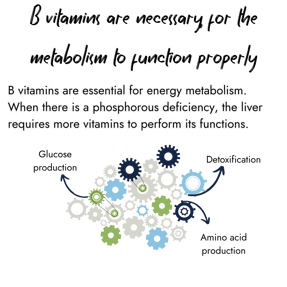
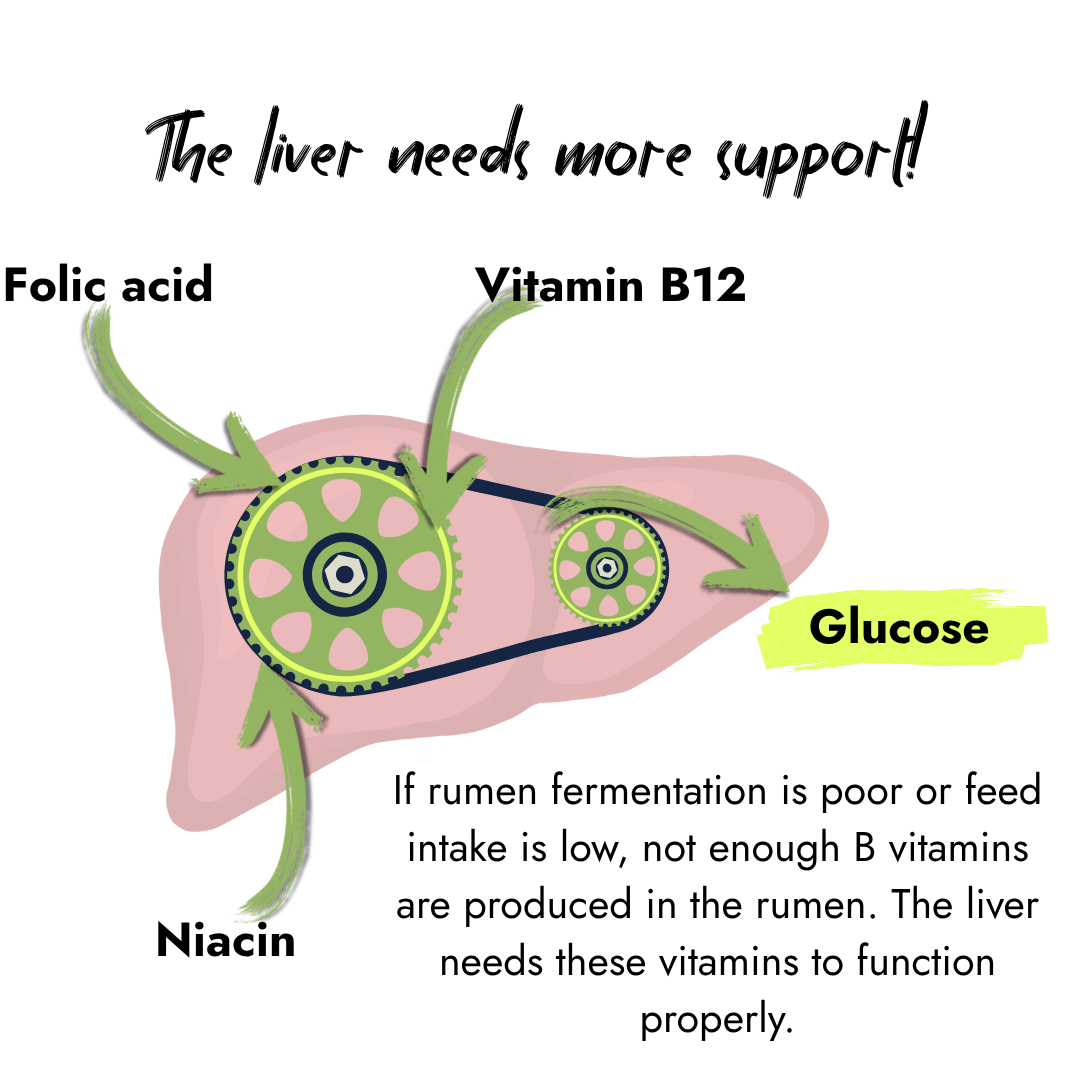
Folic acid, niacin and vitamin B12 ensure central liver functions.
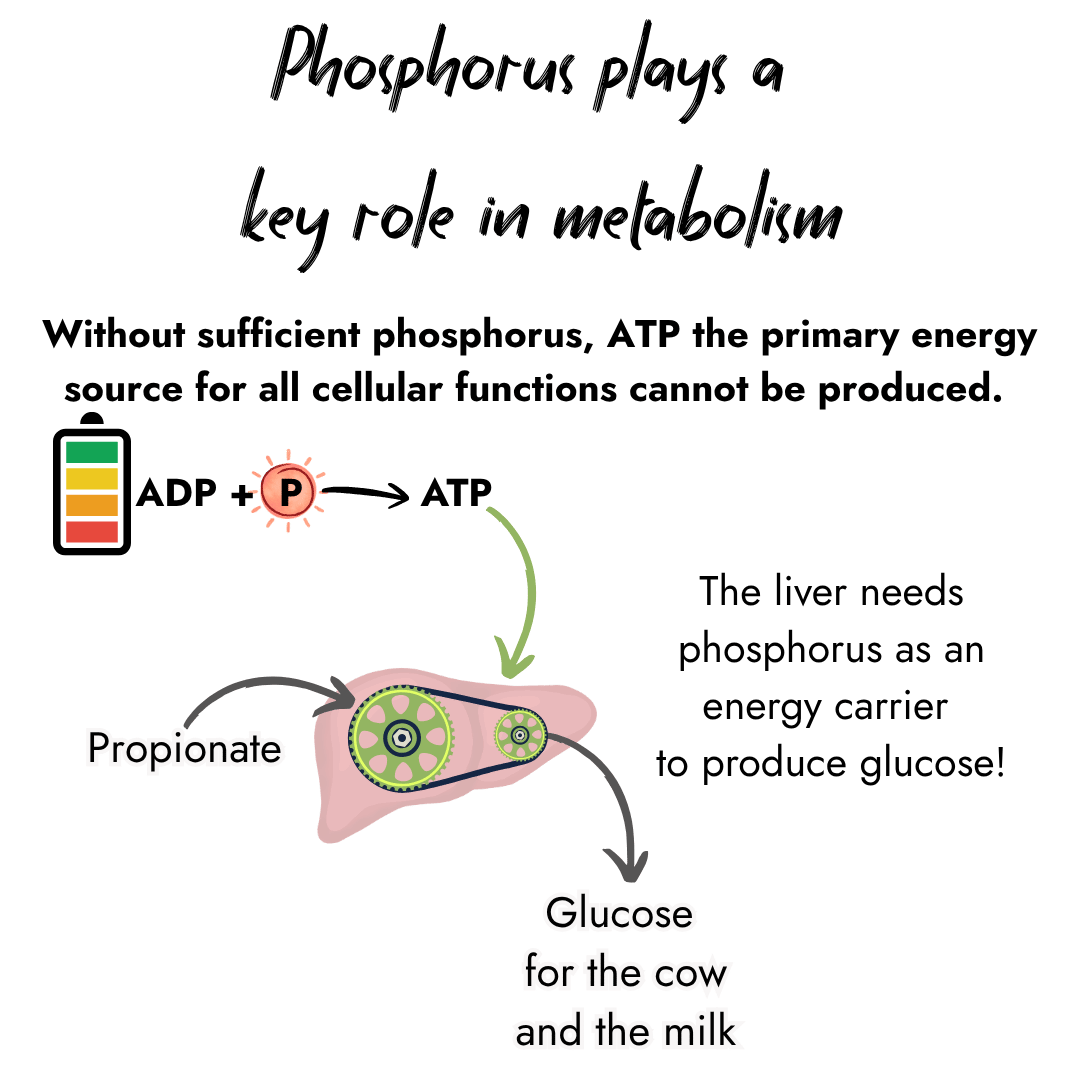
A phosphorus deficiency impairs liver function. The added vitamins promote glucose production, methylation and detoxification for a metabolism that keeps going.
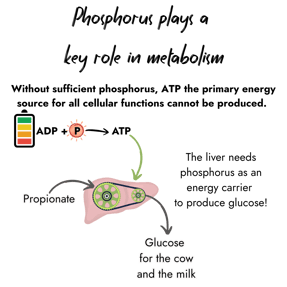
Phosphorus is a central component of cellular energy production.
ATP, the "gasoline of the cell", consists of phosphate compounds. Without a sufficient supply of phosphorus, energy production in the body comes to a standstill - especially in the liver and muscles.
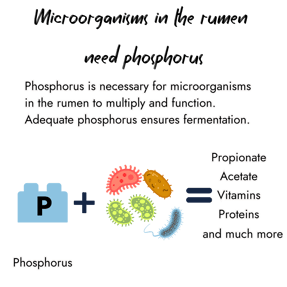
Rumen microbes require phosphorus for reproduction and fermentation.
A functioning rumen is dependent on the availability of nutrients. Phosphorus plays a key role in microbial metabolism; its availability boosts fermentation, feed conversion and appetite.
Targeted feeding - without over- or undersupply.
The administration of 2x2 Boli covers the requirements in the critical phase around calving. The composition has been adjusted to ensure high bioavailability and safe dosing.


Hit with acute phosphorus deficiency
Get the fast-acting fix hereDemand increases - intake decreases.
A phosphorus deficiency is particularly common during the transition period around calving, when the animal's requirements increase rapidly. The development of the mammary gland, the initiation of milk production and altered liver metabolism require large amounts of phosphorus. At the same time, many cows eat less during this phase - the supply drops. The risk of subclinical or acute phosphorus deficiency increases, especially in older or multiparous cows.
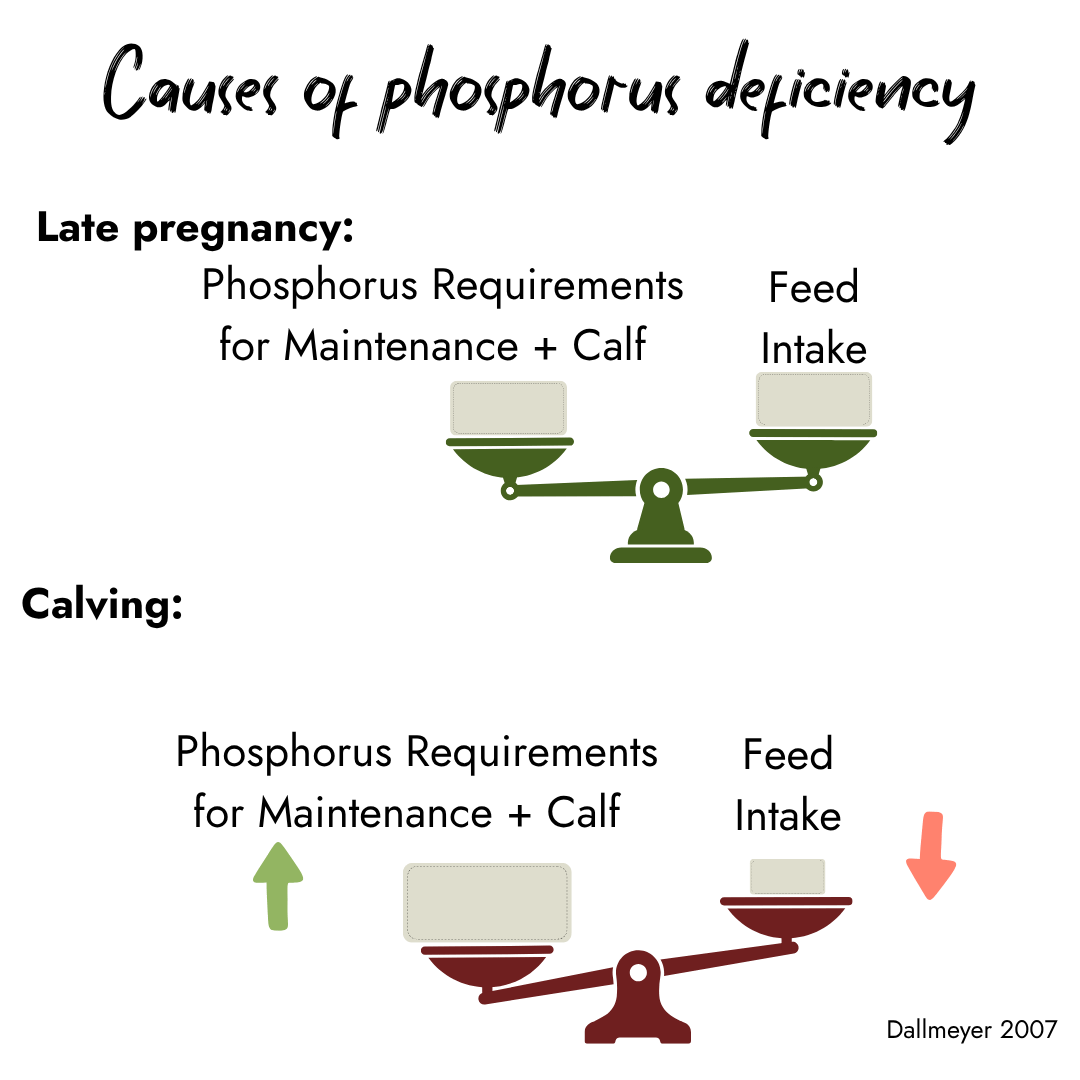
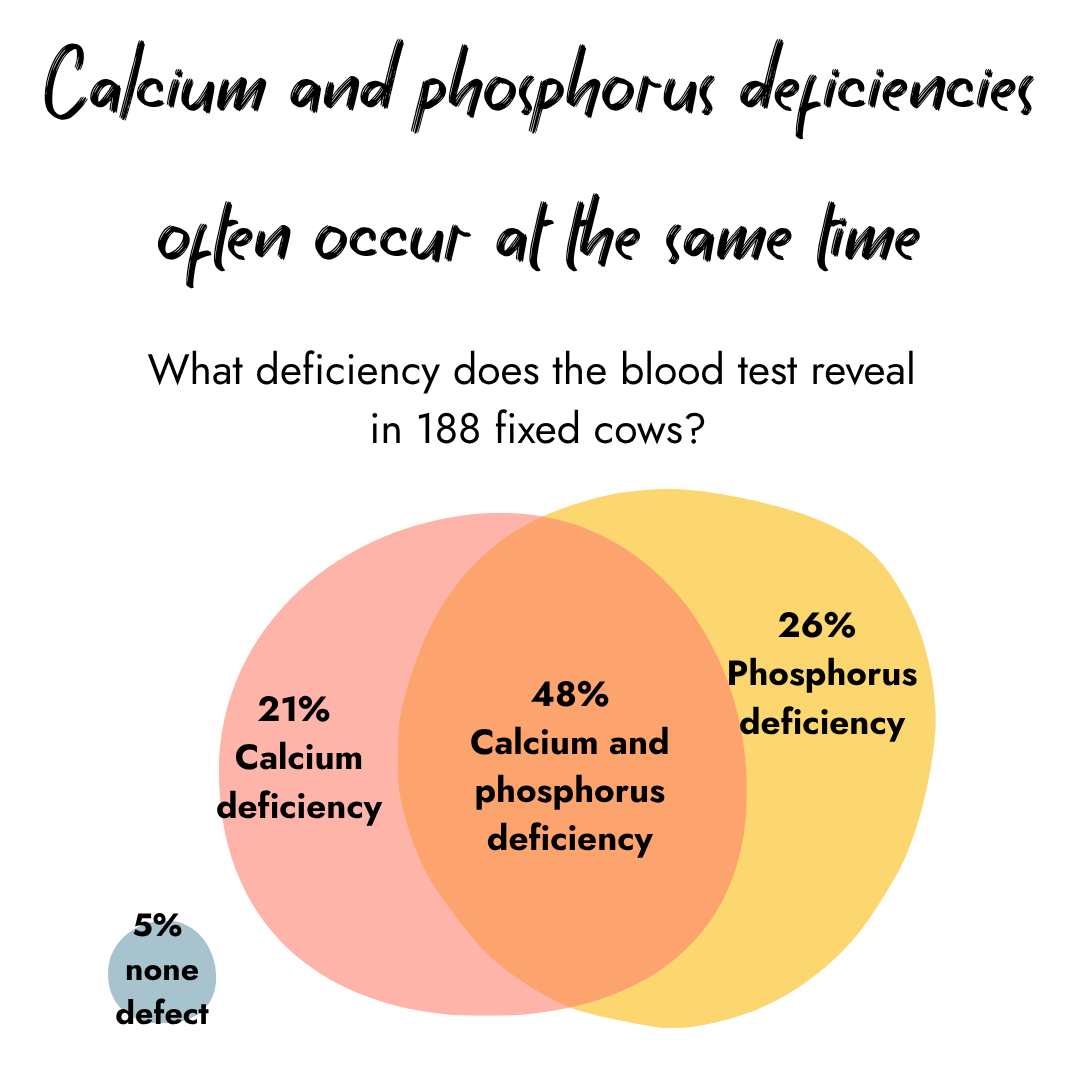
A down cow does not always (or only) mean a calcium deficiency.
Phosphorus deficiency is relatively common at birth and often manifests as apathetic cows that do not get up or only get up briefly, despite calcium supplementation. Other signs include muscle tremors, reduced feed intake, a slow onset of lactation and disturbed metabolism. In contrast to classic milk fever (calcium deficiency), these animals often do not respond to calcium or respond only briefly, indicating an underlying phosphorus deficiency. A rough sign of phosphorus deficiency is warm ears and an alert appearance, while cows with calcium deficiency usually have cold ears and seem dull or unresponsive.
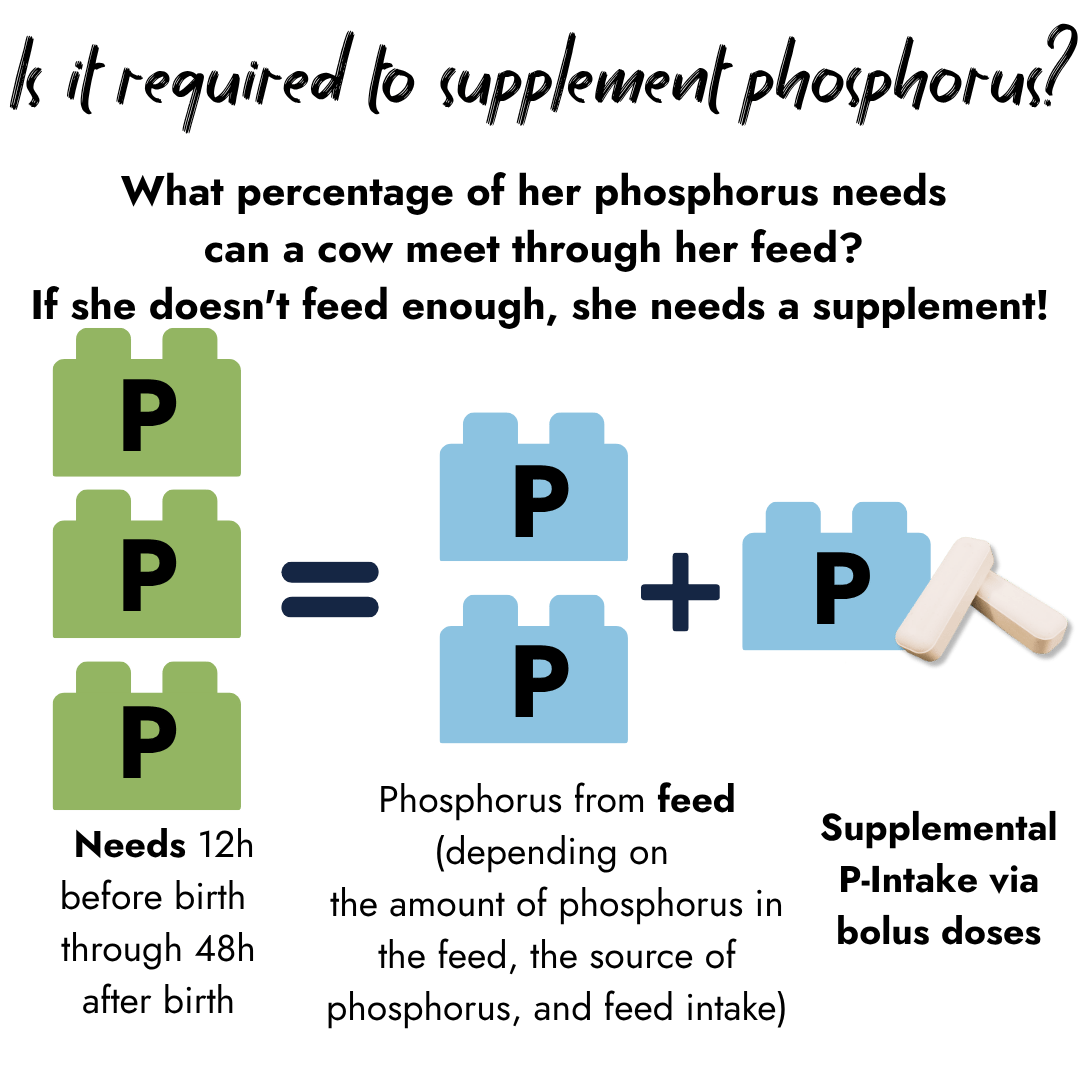
Poor feed intake exacerbates the undersupply.
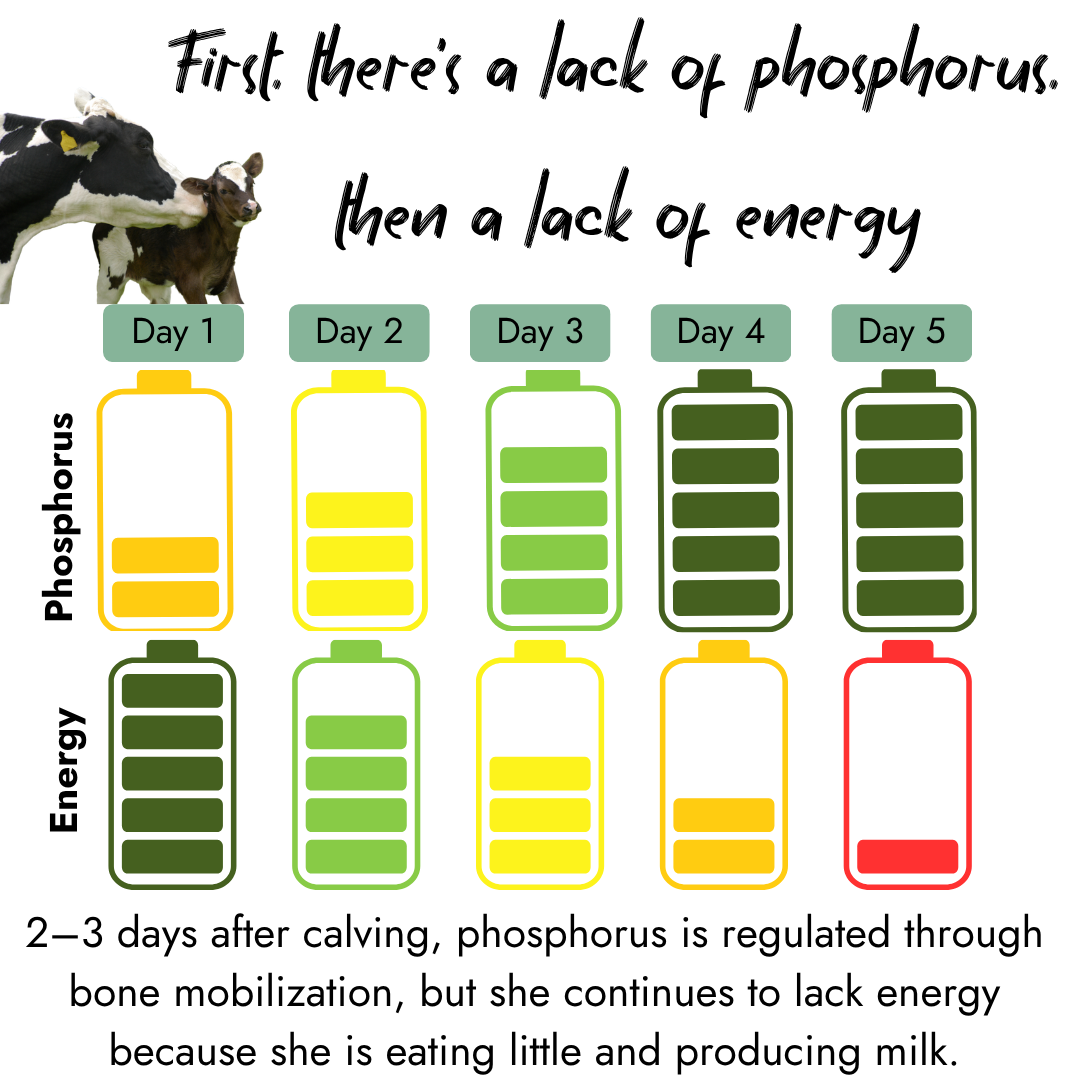
Cows that eat poorly or not at all during the first 12-48 hours after calving quickly develop a dangerous phosphorus deficiency. This further worsens the metabolic situation - a vicious circle begins. A targeted supply of highly available phosphorus can help to break this cycle and stimulate feed intake again.
Invisible deficiency - noticeable effects.
An undetected phosphorus deficiency leads to poor liver function, reduced glucose production, reduced milk yield and delayed return to fertility. The immune system and postnatal regeneration can also suffer. Studies show: The poorer the start, the higher the risk of ketosis, placenta retention and delayed oestrus.
Two problems - one common cause.
Phosphorus deficiency and ketosis are closely linked: Both often occur when feed intake is low, milk production is high and the liver is under stress. While a lack of energy usually causes ketosis, phosphorus deficiency results from insufficient phosphate for important metabolic pathways.
However, the course after calving differs: while ketosis often occurs only a few days after calving, a phosphorus deficiency causes problems immediately after birth. It is often resolved after 2-3 days in milk. Like calcium, phosphorus is released during bone mobilisation and becomes available again after this short adaptation period.
React quickly - provide targeted support.
If a phosphorus deficiency is suspected, a bolus of highly soluble phosphorus should be administered quickly. The PerformaNat PhosphorBolus contains bioavailable KH₂PO₄ and provides important vitamins, including niacin, vitamin B₁₂, and folic acid, to support metabolism.
Optimal application: one administration approx. 4-12 hours before calving and one at calving. If necessary, a second dose can be given postpartum 24-36 hours after calving, depending on the cow's condition and feed intake. Boluses must not be given to cows that are lying, as they cannot swallow the boluses.
Metabolism needs more than one element.
Phosphorus deficiency not only affects the nutrient itself but also disrupts entire metabolic pathways. This is why the bolus also contains niacin (to support liver metabolism), vitamin B₁₂ (for glucose production) and folic acid (for cell regeneration and methylation processes). This combination helps the cow cope better with the transition to lactation.
High performers need more.
The bolus is particularly suitable for multiparous cows, fresh cows with a high production rate, animals with poor feed intake around calving and cows that are stuck without a clear calcium response. Targeted phosphorus supplementation is also recommended after a complicated birth or if liver stress is suspected.