

It is important that calcium is provided quickly
Not all silage is the same, that is well known. The same applies to calcium: Not all calcium is the same.
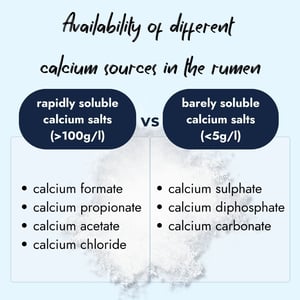
It depends on the exact source of calcium, because only dissolved calcium (Ca2+) can be absorbed in the rumen.
Calcium in our PerformaNat CalciumBoluses is provided as highly bioavailable calcium formate, which is rapidly soluble in the rumen. In addition, calcium formate is a gentle, mucous membrane-compatible source of calcium that, unlike calcium chloride, does not cause chemical burns in the rumen. Other sources of calcium, such as calcium carbonate or calcium sulphate, are less soluble and only dissolve in the intestine, if at all.
 Calcium absorption takes place for the most part in the rumen and can be enhanced
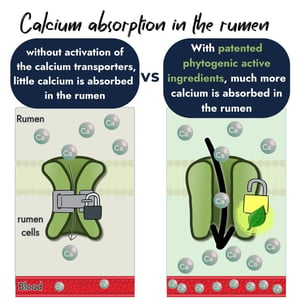
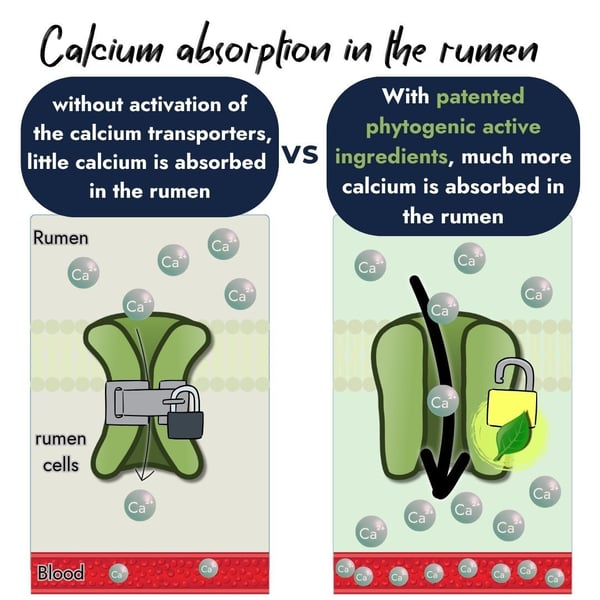
Our patented phytogenic active ingredients increase calcium absorption in the rumen by specifically activating the existing calcium transport channels.
By activating transport channels in rumen tissue, calcium from the bolus can be transported much faster from the rumen into the bloodstream, helping compensate for the calcium deficiency around calving. Of course, this also applies to calcium, which the cow absorbs at the same time via the feed.
It's the quantity that counts
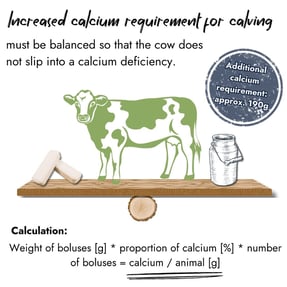
Each application provides the cow with 48 g of available calcium. The combination of phytogenic active ingredients ensures that the cow's additional requirements are met quickly.
Due to the high calcium content, the entire additional requirement of 190g of calcium can be met during the period around calving and the cow can enter lactation with a stable calcium level.
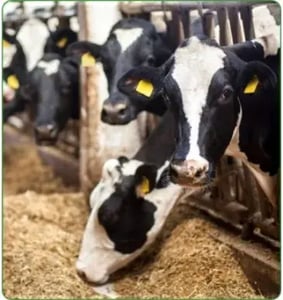
Adequate calcium supply promotes rumen function and rumination.
A sufficient supply of calcium promotes movement in the rumen and gastrointestinal tract. The cow can stand securely and consume enough feed to meet her additional nutritional requirements.
In addition, the phytogenic active ingredients have an appetite-enhancing effect, thereby increasing feed intake. This creates the foundation for a healthy start into a productive lactation.
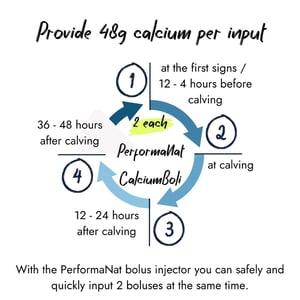
Timely prophylaxis pays off in several ways
Even before calving, the cow's calcium level starts to decrease due to colostrum production. This is the ideal time to begin calcium bolus administration. The initial bolus and the following administrations provide an optimal supply of quickly available calcium, helping to prevent both subclinical and clinical milk fever.
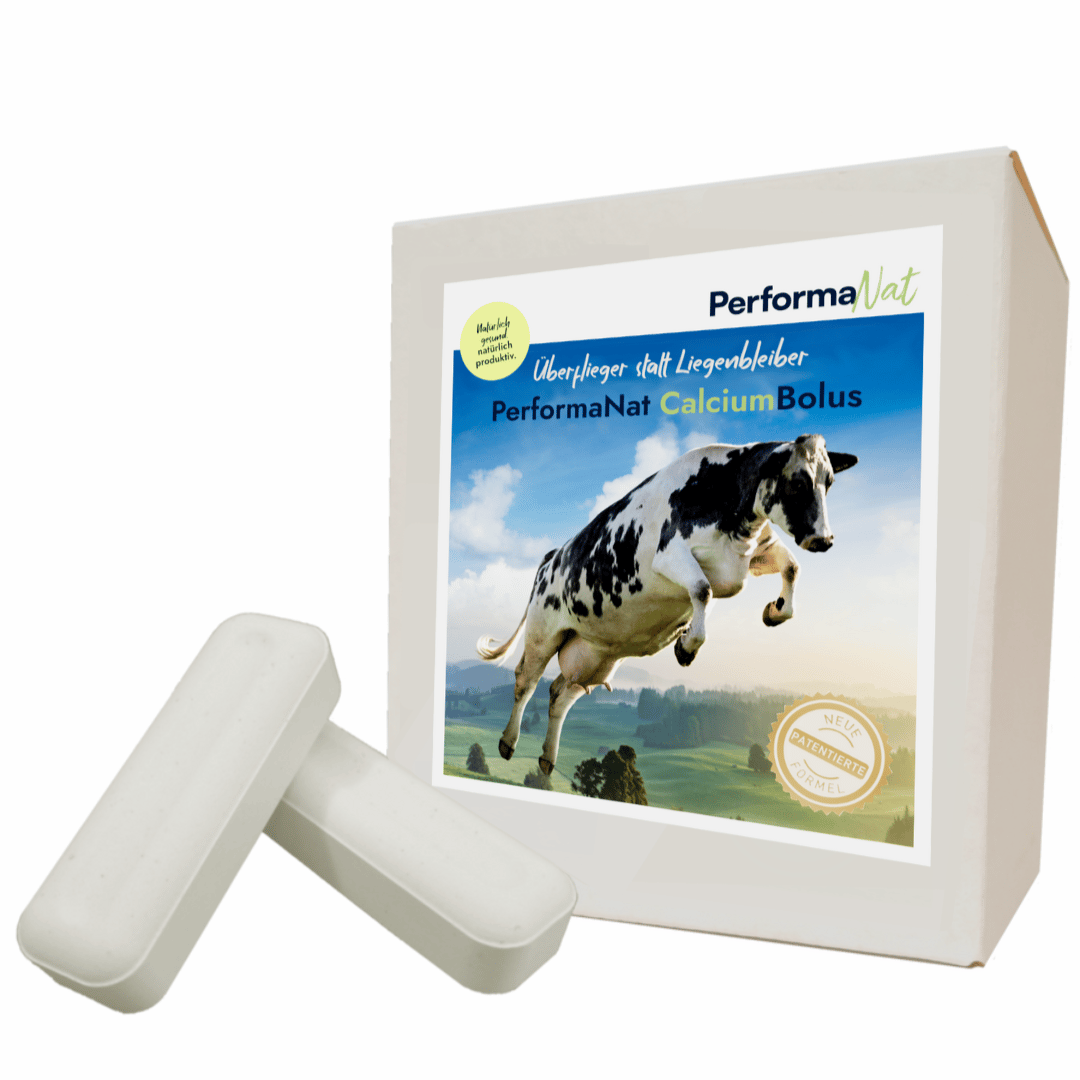

Struggling with milk fever or calcium
Get in touch with usBringing the latest research to your farm
Our story - Focusing on the health of your cows
PerformaNat was founded out of our passion for healthy herds. As veterinarians and scientists, we have invested significant time in developing the best solutions to prevent milk fever. Through years of research and new insights, we have specialised in this field - because we know how important it is to support your cows optimally.
Why milk fever prophylaxis is crucial
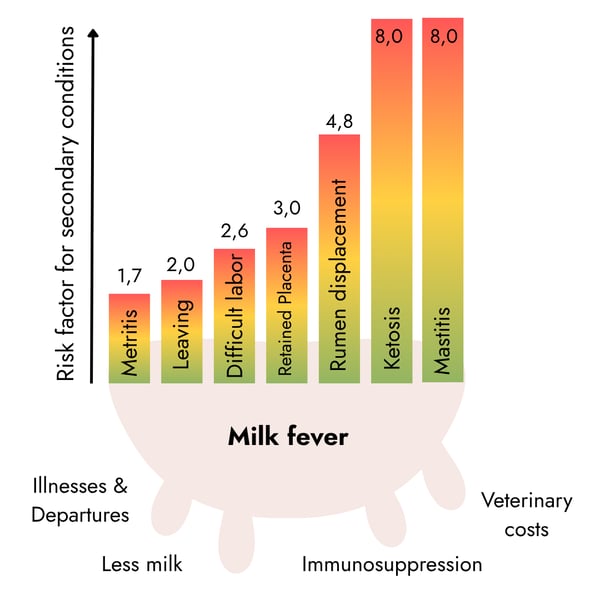
Milk fever weakens cows and opens the door to secondary diseases such as mastitis, retained placenta, ketosis and many more. With the right prevention, your animals stay healthy, calve stress-free and start lactation with high performance - it pays off for you and your herd.
Our mission: Your success
Our patented solutions are scientifically based, practical and tailored to your needs. We support you with personalised advice and innovative approaches for healthier animals, fewer treatments and a sustainable increase in performance.
Contact us, together we will find the best solution for your herd!

The calcium requirement, which rises sharply around calving, cannot be met
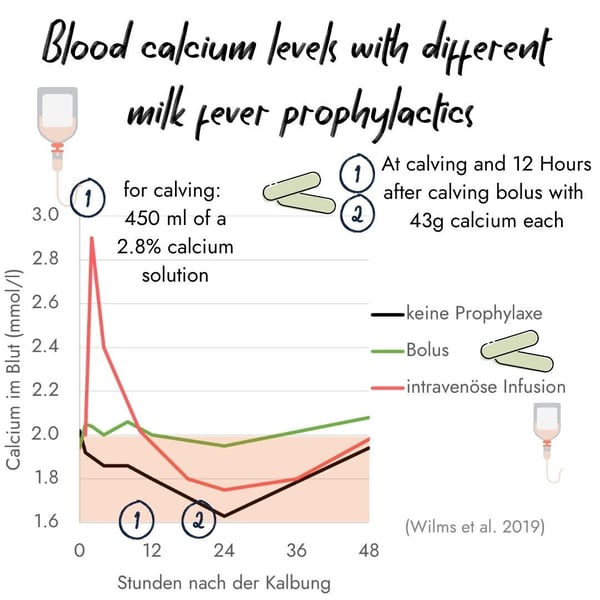
With the onset of milk production, the need for calcium increases rapidly, leading to a physiological drop in blood calcium around calving. The cow needs approx. 2-3 days to recover from this drop. After she notices the calcium deficiency, a vitamin D-dependent hormonal process is triggered, which releases calcium from the bones, thereby meeting the additional requirement. In the 2-3-day window around calving, there is a risk of milk fever, i.e., a calcium deficiency. Some cows have smaller deficits (green line), others have such a severe calcium deficiency that the free calcium in the blood is not sufficient to maintain muscle contraction. As a result, the cow can no longer stand and needs a calcium infusion to stand up again (red line). However, many more cows suffer from a subclinical calcium deficiency, which is not visible from the outside (yellow line). In these animals, calcium levels drop below the threshold of 2 mmol/L, increasing the risk of secondary diseases because muscle function and the immune system are impaired.
As subclinical or clinical calcium deficiency increases the susceptibility to secondary diseases, a planned prophylactic strategy for your dairy herd is necessary to ensure its productivity and health.
The likelihood of milk fever increases with each lactation
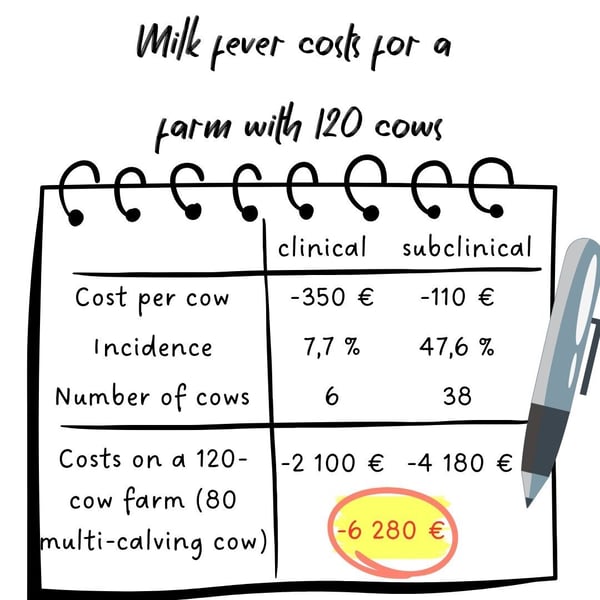
The older a cow gets, the higher the risk of clinical and subclinical milk fever. In a large-scale study, the blood calcium levels of 1,380 cows from 115 farms in Germany were examined. The proportion of clinical milk fever in multi-calving cows was 7.7%. However, these are only the tip of the iceberg: every second multiparous cow was unable to stabilise her calcium level sufficiently (47.6% of all cows). From the 4th lactation onwards, only every 4th cow was sufficiently supplied with calcium.
What does this mean for your work on the farm?
From the 2nd lactation onwards, every 3rd cow is no longer adequately supplied with calcium, as reflected in a higher risk of diseases and smaller milk yields. In contrast to ketosis, there are no practical, rapid tests for blood calcium levels that provide reliable results in the barn. In addition, the time course of the drop in calcium levels varies among cows, making it difficult to determine the optimal time to measure calcium status. The aim of providing optimal milk fever prophylaxis is to ensure that as few cows as possible slip into subclinical or clinical calcium deficiency. General herd prophylaxis from the 2nd calving onward has been proven effective.
Calcium is an important key molecule in the metabolism of cows
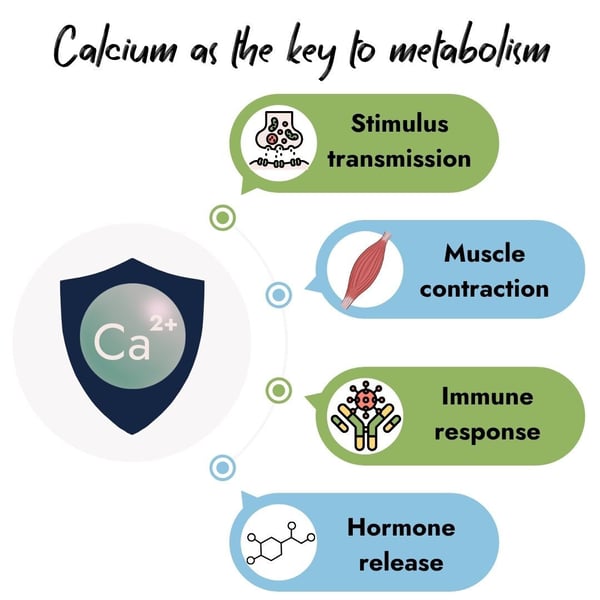
Calcium - key molecule in metabolism
Calcium is involved in many vital metabolic processes and plays an important role in
-
Excitation and signal transmission at synapses (transmission of signals from nerve endings to muscles).
-
Muscle contractions (e.g. heart contraction, teat closure, contractions during calving)
-
Activation and regulation of the immune response
-
Intracellular signalling cascades, hormone release and release of messenger substances
The calcium content in the blood is strictly regulated to prevent malfunctions. At the onset of milk production, blood calcium levels drop too quickly for the cow to compensate. For this reason, calcium deficiency increases the risk of many secondary diseases.
An adequate supply of calcium is essential to prevent milk fever.
If the calcium level drops below the threshold of 2 mmol/l, the cow is not sufficiently supplied with calcium. Calcium has two essential functions in the body: first, the immune system needs calcium to activate an immune response. At birth, inflammation levels rise, but the lack of calcium prevents the immune system from being sufficiently activated. The cow then has greater difficulty fighting infections and inflammation. On the other hand, calcium is necessary for muscle contraction. This applies to the movement of smooth muscles (rumen, gastrointestinal tract, uterus) and skeletal ("normal") muscles. Due to the weakening of the uterus, heavy births and placenta retention occur more frequently. In addition, the uterus cleans itself more poorly, which decreases the success of the first insemination. In addition, cows on shaky legs are less likely to go to the feed table. Due to lower rumen activity and feed intake, fermentation in the rumen declines and the cow slips into an unnecessarily large energy deficit. This massively increases the risk of ketosis and, at the same time, reduces milk production.
Milk fever must be treated!
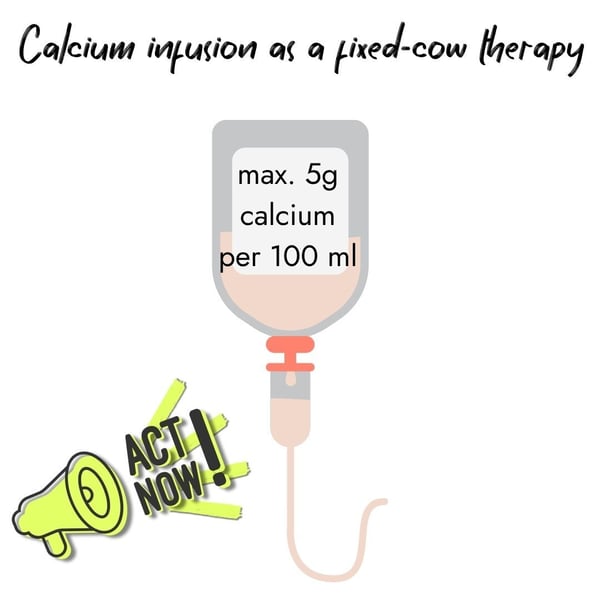
If clinical milk fever occurs, i.e., the cow is unable to stand, an intravenous calcium infusion must be given. This quickly raises blood calcium levels and ensures the cow can stand up again. The amount of calcium in the infusion solution (max. 5 g per 100 ml) is quickly depleted by milk production, which is why it is recommended to give the cows additional oral calcium, e.g., in the form of a calcium bolus. This will protect your cows from immediately falling back into a calcium deficiency.
To reduce cases of clinical and subclinical milk fever and promote a healthy start to lactation, you can meet the additional calcium requirement around calving by using calcium boluses prophylactically.
In rare cases, the cow won't stand up even though the calcium level is stable - in this case, a calcium infusion will not improve the condition. This may result from birth-related damage to the muscles, ligaments or nerves. A phosphorus deficiency can also cause cows to become downers. In contrast to calcium deficiency, these cows appear more alert and require a readily available phosphorus infusion.
An infusion at the wrong time is counterproductive
Calcium infusions are the only appropriate therapy for clinical cases of milk fever. The intravenous infusion ensures that the required calcium enters the bloodstream quickly and becomes available to the muscles, allowing the cow to stand up. To cover the additional calcium requirement, calcium boluses should be given once the cow is standing again.
In recent years, prophylactic calcium infusions have also become established. Various studies show that although cows have higher calcium levels after intravenous administration, these levels drop again shortly after and the cows are more likely to develop subclinical milk fever. For this reason, prophylactic calcium infusions are not recommended.
Injecting calcium solutions under the skin is also controversial, as it carries an unnecessary risk of infection at the injection site and delivers very low doses of calcium. Depending on the product, the calcium content is only 2-5 g/100 ml, which is why the required calcium intake during the calving period (approx. 190 g) is difficult to meet.
There are a number of prophylactic strategies
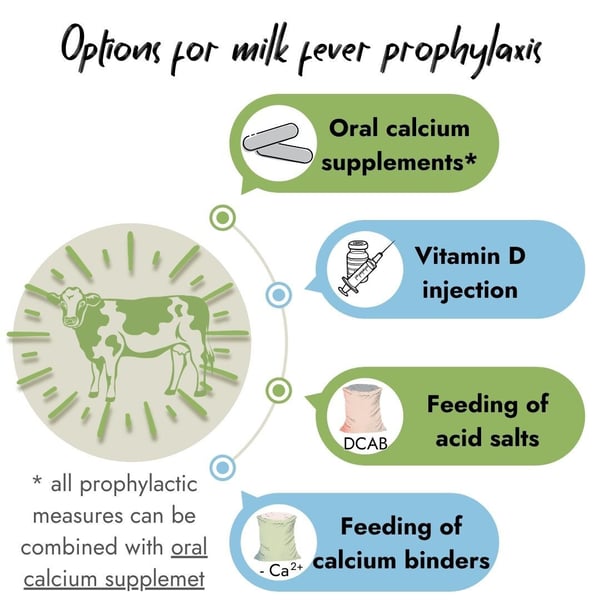
To keep the risk of milk fever low, various strategies can be combined. Feasibility should be assessed at the farm-specific level. Low potassium levels in the dry cow ration, medium body condition score and high feed intake before birth are generally beneficial.
Feeding options:
The use of anionic salts or calcium binders in the last 3 weeks before calving activates the release of calcium from the bones. The correct dosage is important for success: if too little is used, bone mobilisation is not activated, if too much is used, feed intake is reduced.
Possibilities for individual prophylaxis:
Injecting vitamin D3 between 2 and 8 days before calving results in bone mobilisation. It is important that the time window up to calving is followed strictly, otherwise, the body will counter-regulate and the risk of milk fever will increase again. A single follow-up dose is possible.
Oral calcium doses, such as the PerformaNat CalciumBolus, are most frequently used in the period leading up to birth. Quickly available calcium compensates for the calcium gap until the body can mobilise its own reserves. As it is administered to the animal, this solution is independent of feeding management.
Prevention is the key
In addition to the existing recommendations (low-potassium feed during the dry period, adequate supply of magnesium, calcium and phosphorus, medium BCS), there are new scientific findings on how to increase calcium intake directly. Without feeding anionic salts, calcium binders or injecting vitamin D, the rumen is responsible for 90% of calcium absorption. Here, calcium is transported from the rumen into the blood via TRPV3 channels. With certain phytogenic substances, these channels can be activated, allowing more calcium to be transported into the bloodstream more quickly. Phytogenic substances have an immediate effect, thereby increasing the amount of available calcium in the blood.
The PerformaNat CalciumBolus contains these active ingredients, which increase the calcium absorption of 1) calcium from the feed and 2) quickly available calcium from the bolus.
Choosing the right prophylaxis strategy for your farm is crucial!
The absorption of calcium is regulated by transport proteins in the gastrointestinal tract. In ruminants, a large proportion of calcium is already absorbed in the rumen, the largest forestomach. Calcium intake from the feed is insufficient to meet the requirement, especially at the beginning of lactation. Improved calcium absorption can therefore help to prevent milk fever.
Extensive in vitro and ex vivo studies on isolated rumen epithelium have shown that calcium-transport proteins can be specifically activated by phytogenic substances. Calcium uptake from the rumen can thus be significantly increased (Rosendahl et al, 2016).
These results were confirmed in in vivo feeding studies with lactating dairy cows: feeding a phytogenic feed additive led to a significant increase in blood calcium levels (Braun et al., 2018). The targeted use of phytogenic active ingredients can thus contribute to improved calcium absorption and open up a completely new approach to milk fever prophylaxis.
Treatments, milk loss, secondary diseases, poorer fertility and culling. All of this has an impact if the calcium supply at birth is insufficient. The cost per cow suffering from clinical milk fever is at least 350 €. Subclinical milk fever costs at least 110 €.
For a herd of 120 cows, this results in a loss of over 6,200 € due to insufficient calcium supply. You can reduce these costs through optimal milk fever prophylaxis, as the prophylactic use of calcium boluses in your herd will help your cows get off to a healthy start to a productive lactation.
Yes, if you look at the fine print, you can easily compare products with each other
Every product must have precise information about its composition. The analytical components (%), the total weight of the product and the ingredients must be stated. If these are missing, you should be suspicious and ask the seller. This tends to be a bad sign!
Use the following points as a guide:
-
Calcium source: this should be gentle on the cow and compatible with the mucous membranes (e.g. calcium formate, calcium propionate, calcium acetate). These are also highly soluble and the calcium can be transported quickly from the rumen into the blood.
-
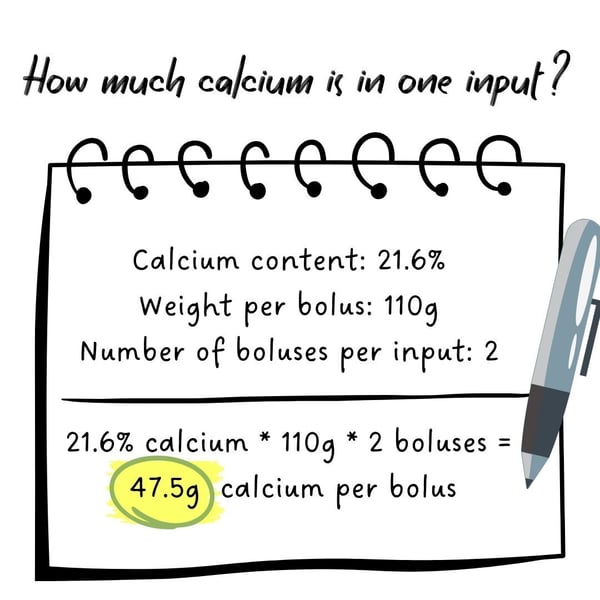
Calcium quantity: How high is the calcium content? This can be found on the label under "Analytical components: Calcium in %". In order to calculate the amount of calcium per input, you also need the weight per bolus and the input quantity. An example calculation for the PerformaNat CalciumBolus is shown in the illustration. A good milk fever prophylaxis should contain at least 45 g of calcium per intake.
- Other ingredients: there is a wide range of ingredients contained in the products:
- Magnesium: promotes the activation of the parathyroid hormone for calcium mobilisation from the bone
- Phosphorus: counteracts phosphorus deficiency (depending on quantity!)
- Phytogenic active ingredients: some active ingredients can specifically activate calcium absorption in the rumen
- Vitamin A or vitamin E has an antioxidant effect
We are happy to help you compare different products.