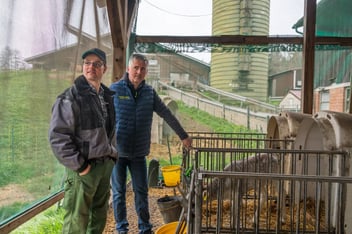
After the introduction of CatiBovin, Mr. Gräßer noticed a significant increase in feed intake within the first two weeks.
Increased efficiency with CatiBovin: More milk with reduced concentrate feed - success story from the Dobareuth agricultural cooperative
Under the leadership of Wolfram Gräßer, PerformaNat's CatiBovin is being used at the Dobareuth Agricultural Cooperative to optimize feed intake and milk production in a herd of approximately 450 dairy cows. At the beginning, the average milk yield was 36 kg per cow per day.
2 barns with the same management - ideal conditions to measure the effect of CatiBovin
Mr. Gräßer had already had different experiences with feed additives and was sceptical at first. As the agricultural cooperative operates two sites with the same feeding and milking technology, one barn was initially intended to serve as the experimental farm and the other as the control farm.
After the introduction of CatiBovin, Mr. Gräßer noticed a significant increase in feed intake within the first two weeks. This led to an increase in milk yield of around 1.5 kg per cow per day. "With CatiBovin, feed intake increased over the next few weeks and with it the milk yield," he reports.
CatiBovin is used at Agrargenossenschaft Dobareuth both for lactating cows and for dry cows during the transition period. After positive effects were observed on the first farm, Mr. Gräßer decided to use the product on the second farm as well. "After 14 days, feed intake had increased on the first farm. And then I said that if feed intake increased and I hadn't changed anything else, it must be due to CatiBovin, so I decided to mix it into the ration in the second barn," he explains. A similar increase in milk yield was also recorded here. As a positive side effect, Mr. Gräßer reported that the measured values for rumination showed fewer upward and downward deviations:
I already noticed a significant increase in feed intake in the first two weeks, as well as an increase in milk yield of around 1.5 kg per cow per day.
Long-term stabilisation of milk yield:
After four months of using Catibovin, the yield stabilised at 38.5 kg, indicating a sustained effect of the product. During CatiBovin use, feeding practices were also adjusted, including the use of different silage cuts and a reduction in concentrate intake. Despite this reduction, the increased milk yield was maintained, which indicates improved feed efficiency. "So that means a higher milk yield despite a lower amount of concentrates and better mixed feed," confirms Mr Gräßer. They are currently analysing fertility and a positive trend is emerging. "However, we still have to wait a little longer to be able to make a definitive statement. But despite the higher milk yield, fertility has definitely not deteriorated."
By using CatiBovin, Agrargenossenschaft Dobareuth was able to sustainably improve the feed intake and milk yield of its herd.

Cut costs with
See our products